Projects / EduMation
CASE STUDY · ENTERPRISE PLATFORM

EduMation

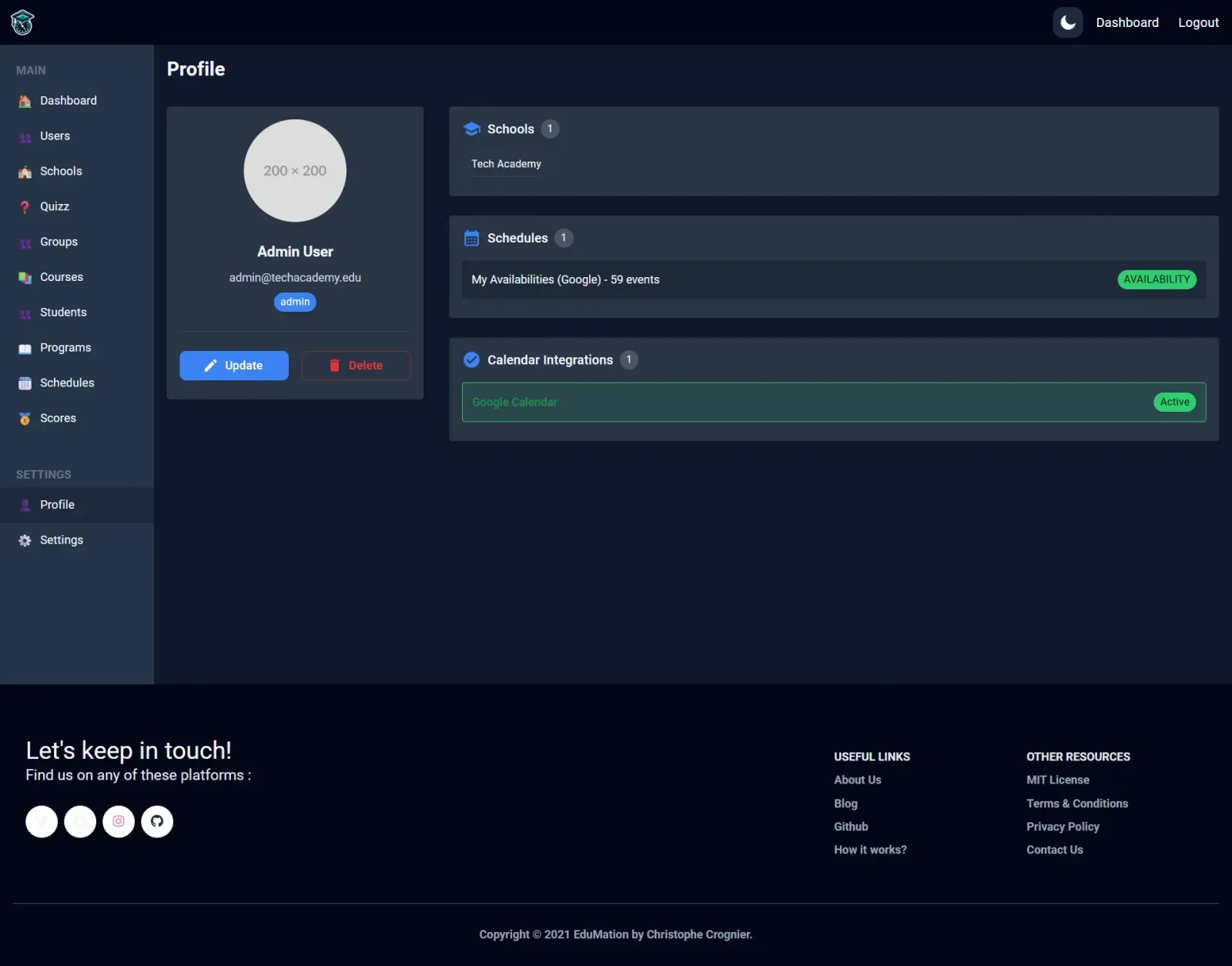
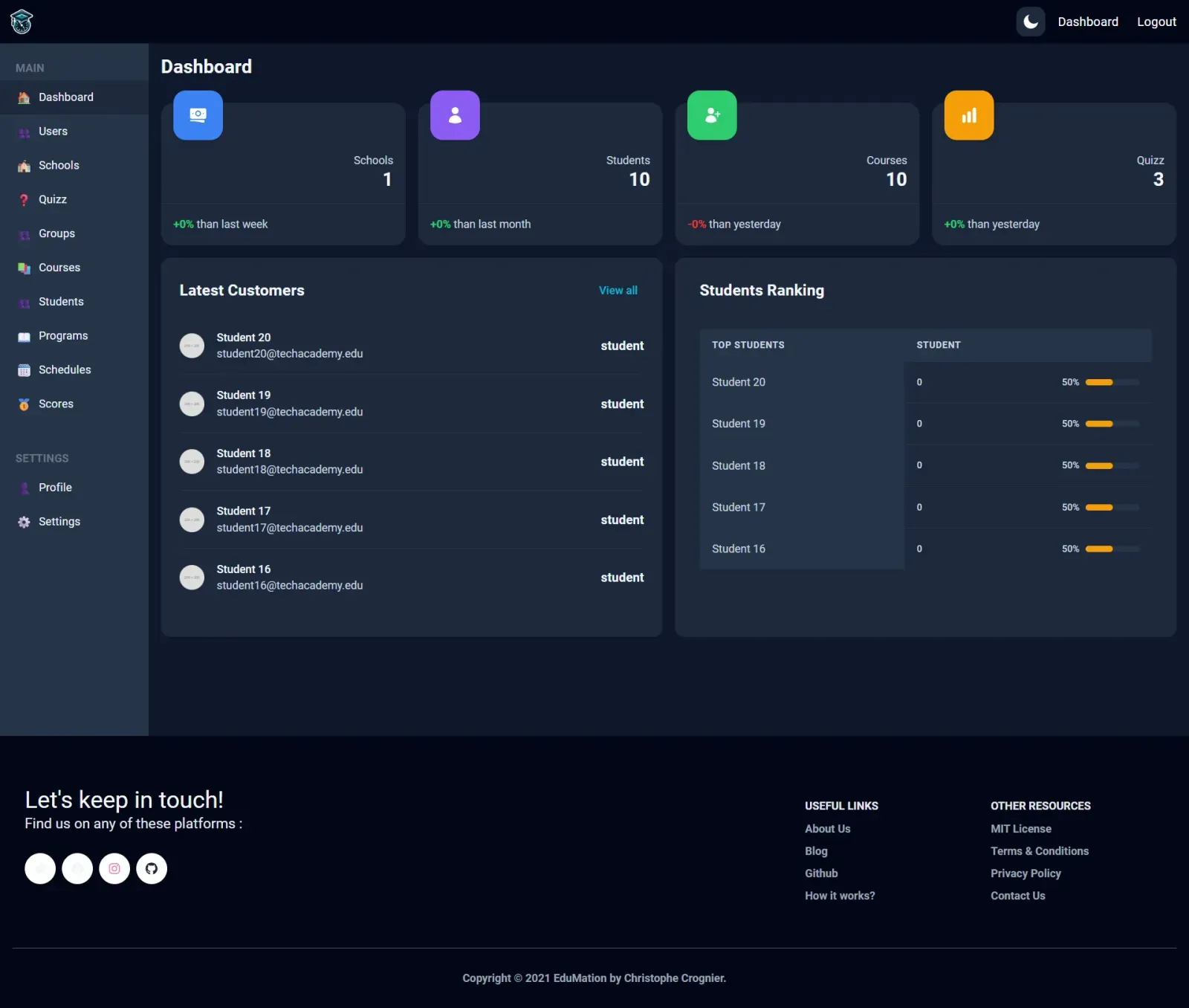
EduMation is an enterprise-ready education management platform focusing on solving complex scheduling and administrative challenges through automation. The platform centralizes student, teacher, and course management within a multi-tenant architecture, while its core feature — an intelligent, constraint-aware scheduling engine — automates the generation of weekly schedules by integrating internal requirements with external calendar availability (Google, Microsoft, ICS).

reactnodejsdocker
Role
Solo · full-stack
Timeline
2023 · 14 weeks
Platform
Web · SaaS
Type
Enterprise Platform
edumation.app
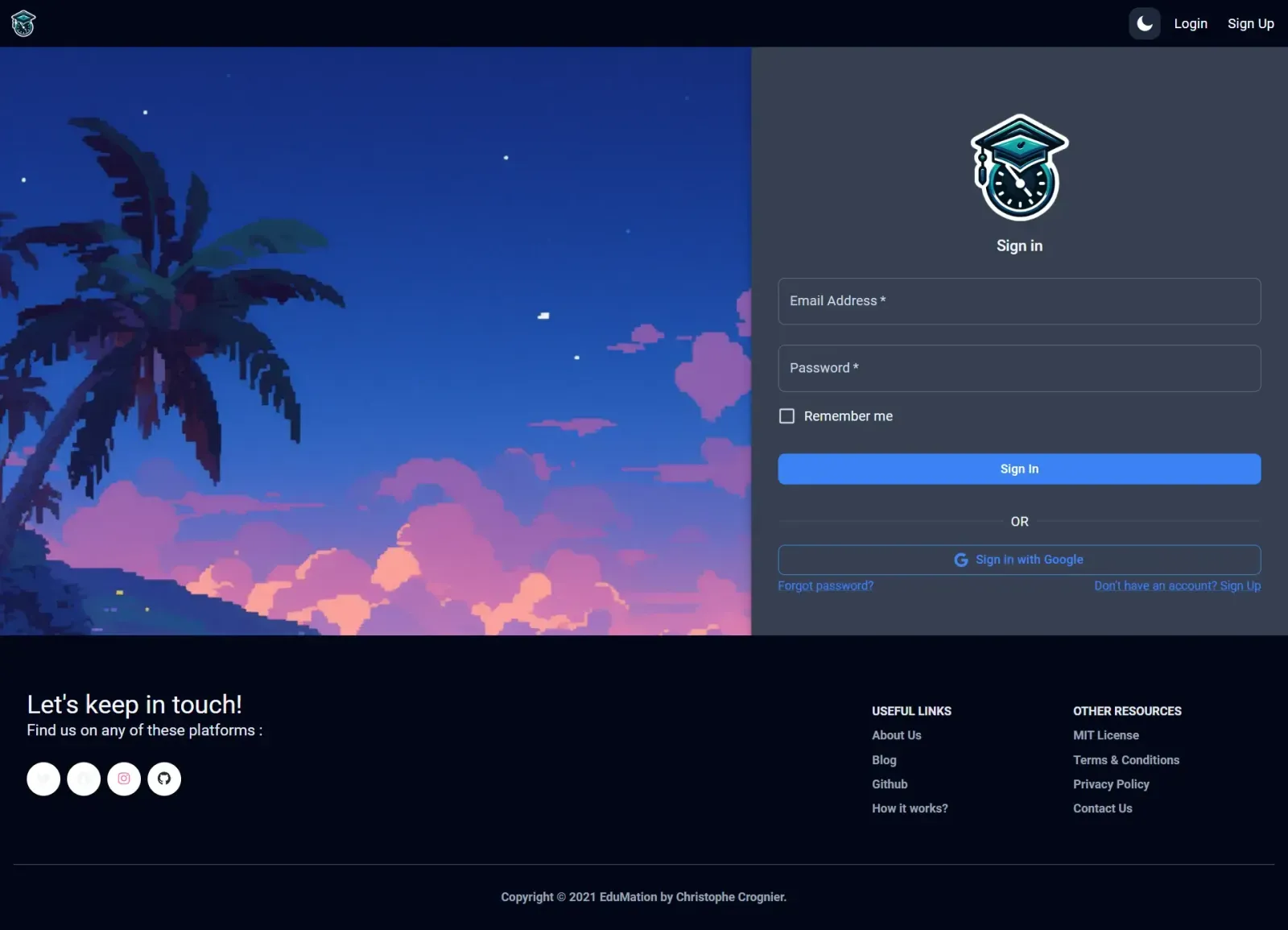
EduMation screenshot
THE PROBLEM

Education institutions face a 'scheduling nightmare': manually coordinating dozens of teachers, student groups, and courses across limited time slots while avoiding conflicts with external personal commitments.

Built for professional training organizations managing multiple schools, programs, and student cohorts. The platform needed to handle complex constraint-based scheduling (teacher availability, room capacity, course dependencies) at scale while ensuring strict data isolation between institutions.

  • Manual scheduling is brutal. Coordinating dozens of teachers and courses by hand takes days and is error-prone.
  • One change breaks everything. A single teacher conflict cascades into dozens of reassignments across the semester.
  • No tool exists for this niche. Generic scheduling software can't handle domain-specific education constraints.

Training organizations & coordinators

Professional training orgs managing multiple schools, programs, and student cohorts at once

14d→5min
scheduling time
100%
conflict-free
90%
less admin work
THE SOLUTION

from weeks to minutes.

A modular MERN (MongoDB, Express, React, Node) stack with TypeScript for strict type safety. The React frontend follows a custom internal Design System, while the Node.js backend implements a heuristic-driven scheduling service. Each institution's data is isolated via a schoolId-based filtering layer, and external availability is cached with a 180-day TTL index for O(1) conflict checks.

01

Import

Load teachers, student groups, rooms and constraints.

02

Generate

Heuristic solver proposes 3 conflict-free schedules.

03

Refine

Coordinators tweak and validate in the drag-and-drop UI.

04

Publish

Live calendar synced to all teachers and students.

in progress
Before
manual workflow
fragmented tools · high manual overhead
After
edumation.app
single unified product · fast & automated
KEY FEATURES

Built around how training organizations & coordinators actually work.

FEATURE 01

AI Scheduling Engine

A heuristic solver that processes hard constraints (teacher availability, room capacity) and soft constraints (lunch breaks, preferences) to generate conflict-free proposals in under 5 minutes.

  • Generates 3 distinct proposals using seed-based randomization
  • Handles complex multi-cohort timetabling in seconds
ai-scheduling
AI Scheduling Engine
FEATURE 02

Real-Time Calendar Sync

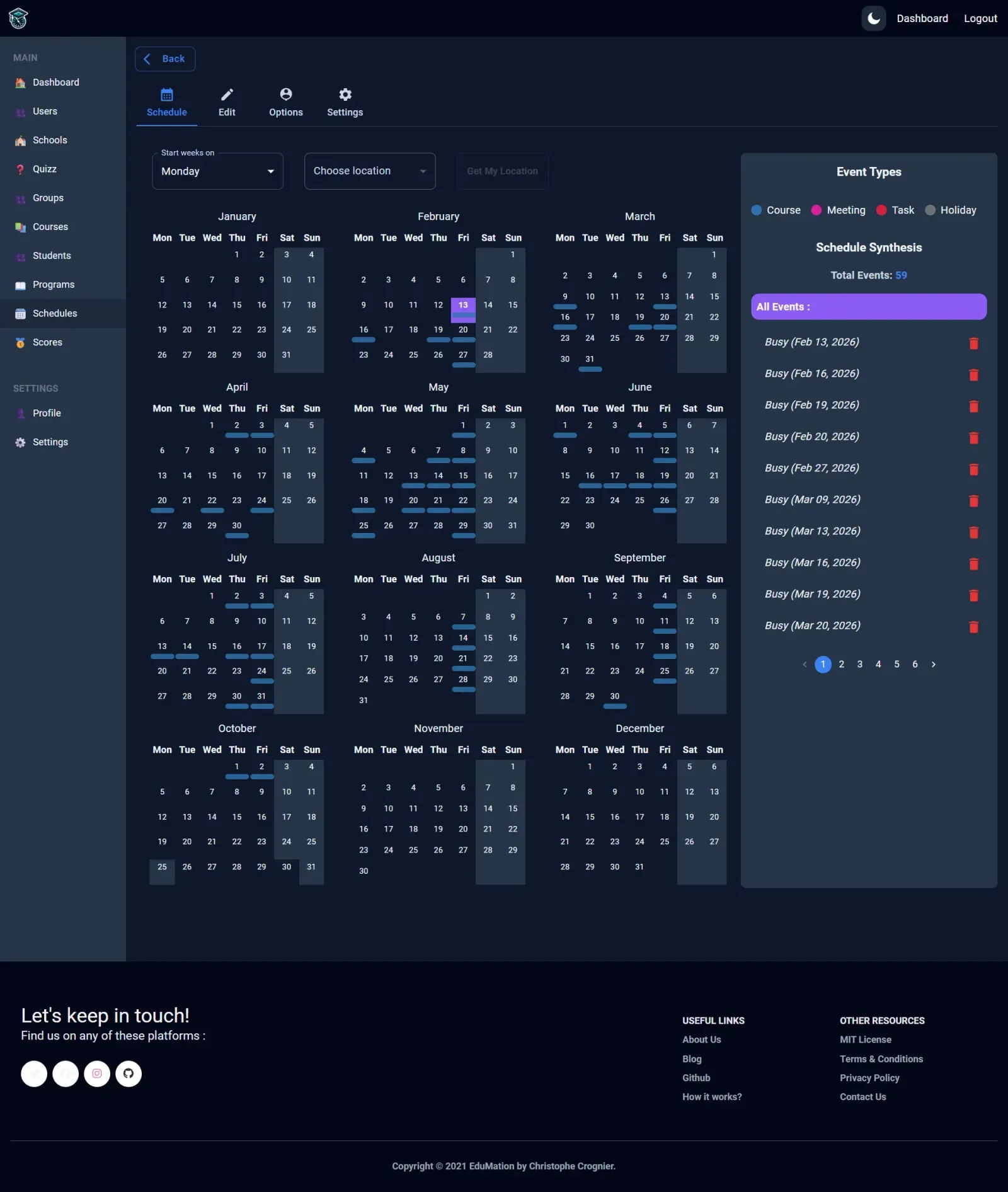
Two-way OAuth2 sync with Google Calendar and Microsoft Graph ensures teacher personal commitments are always reflected, with no manual import step.

  • 180-day TTL caching for O(1) conflict checks
  • Background sync worker handles rate limits gracefully
real-time-calendar
Real-Time Calendar Sync
FEATURE 03

Multi-Tenant Architecture

Strict data isolation enforced at the middleware layer ensures one institution never sees another's data, even on shared infrastructure.

  • SchoolId-based filtering on every database query
  • Role-based access control per institution and role
multi-tenant-architecture
Multi-Tenant Architecture
TECHNICAL CHALLENGE

Hard problems solved.

The scheduler uses a greedy heuristic that sorts courses by their 'degree of constraint' (Least-Constrained-First). It computes invalid slots by indexing internal events and cached external busy intervals. A seed-based randomization system generates three distinct proposals for administrators, while a dedicated sync worker handles OAuth2-based integrations with external calendar providers.

What made it hard

  • Solving the NP-Hard scheduling problem while weighing multiple soft and hard constraints like lunch breaks, working hours, and teacher preferences.
  • Ensuring strict multi-tenant data isolation via middleware-level filtering for all database queries across the shared infrastructure.
  • Managing high-latency external calendar syncs (Google, Microsoft Graph, ICS) without blocking core application flows or exceeding provider rate limits.
  • Building a high-performance interactive schedule UI capable of rendering hundreds of dynamic events with sub-100ms response times for edits.
architecture.ts
1 const frontend = [ "React", "TypeScript", "Custom Design System" ];
2 const backend = [ "Node.js", "Express", "MongoDB" ];
3 const integrations = [ "Google Calendar API", "Microsoft Graph", "ICS" ];
4 const devops = [ "Docker", "CI/CD", "Redis" ];
THE STACK

Technologies used.

Frontend
ReactTypeScriptCustom Design System
Backend
Node.jsExpressMongoDB
Integrations
Google Calendar APIMicrosoft GraphICS
DevOps
DockerCI/CDRedis
WHAT THIS PROVES

What EduMation demonstrates.

AI problem solving

Designed and shipped a production heuristic solver for an NP-Hard scheduling problem.

Multi-tenant security

Built row-level data isolation across a shared SaaS database without any tenant cross-contamination.

High-performance UI

Rendered hundreds of dynamic calendar events with sub-100ms interactive response times.

Third-party integrations

Shipped and maintained live OAuth2 syncs with Google Calendar and Microsoft Graph.

WORK WITH ME

Want to build something like this?

Bring me your idea or half-built project. We'll scope it, design it and ship it — using the same workflow behind EduMation.
Next case study RailGuessr